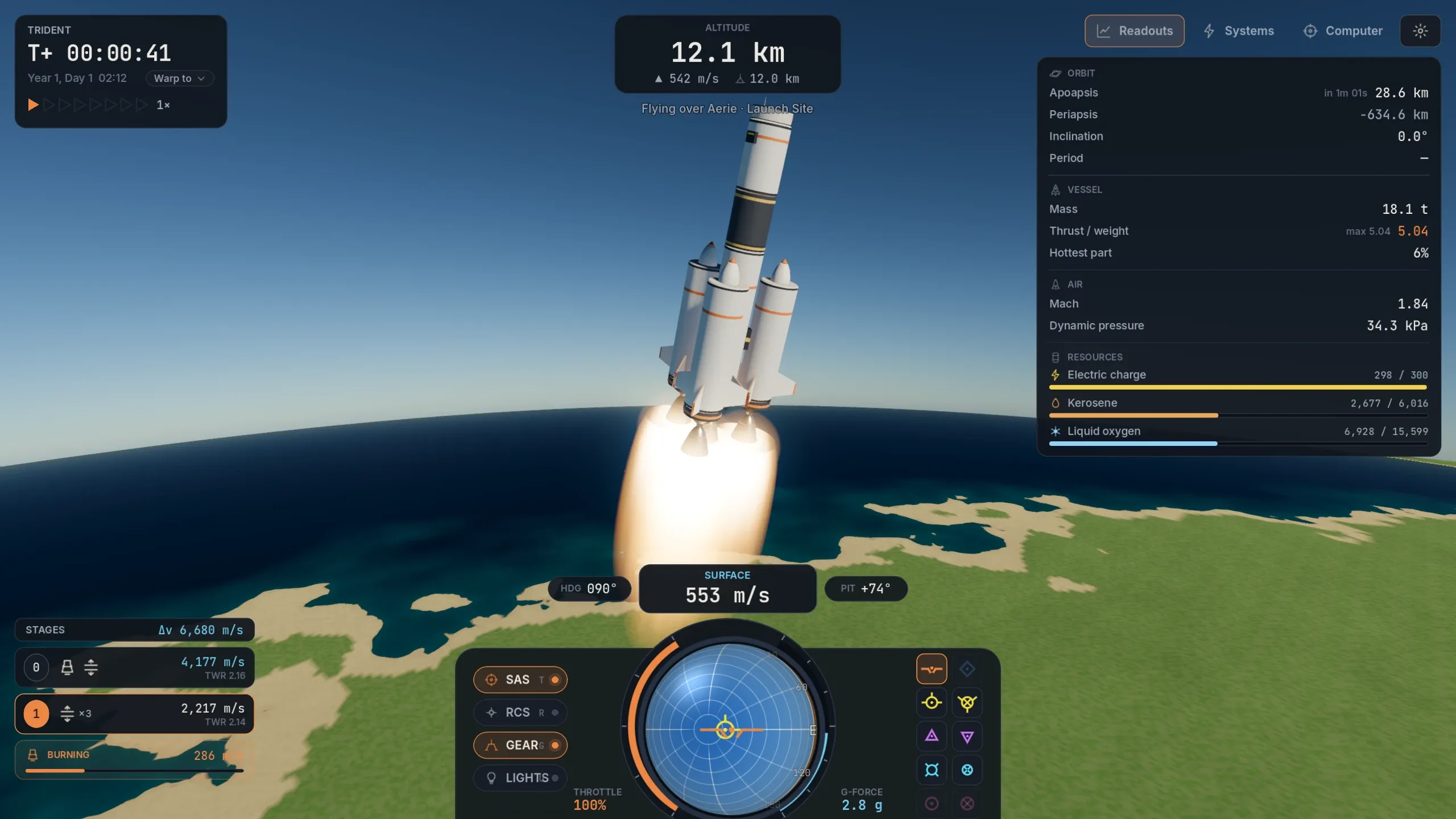
Lighter Than Nothing
A spaceflight simulation about building rockets, flying them, and following one strange measurement all the way to its answer.
A stained-glass roguelike deckbuilder about painting glass monsters with color and mixing the stains until they shatter.
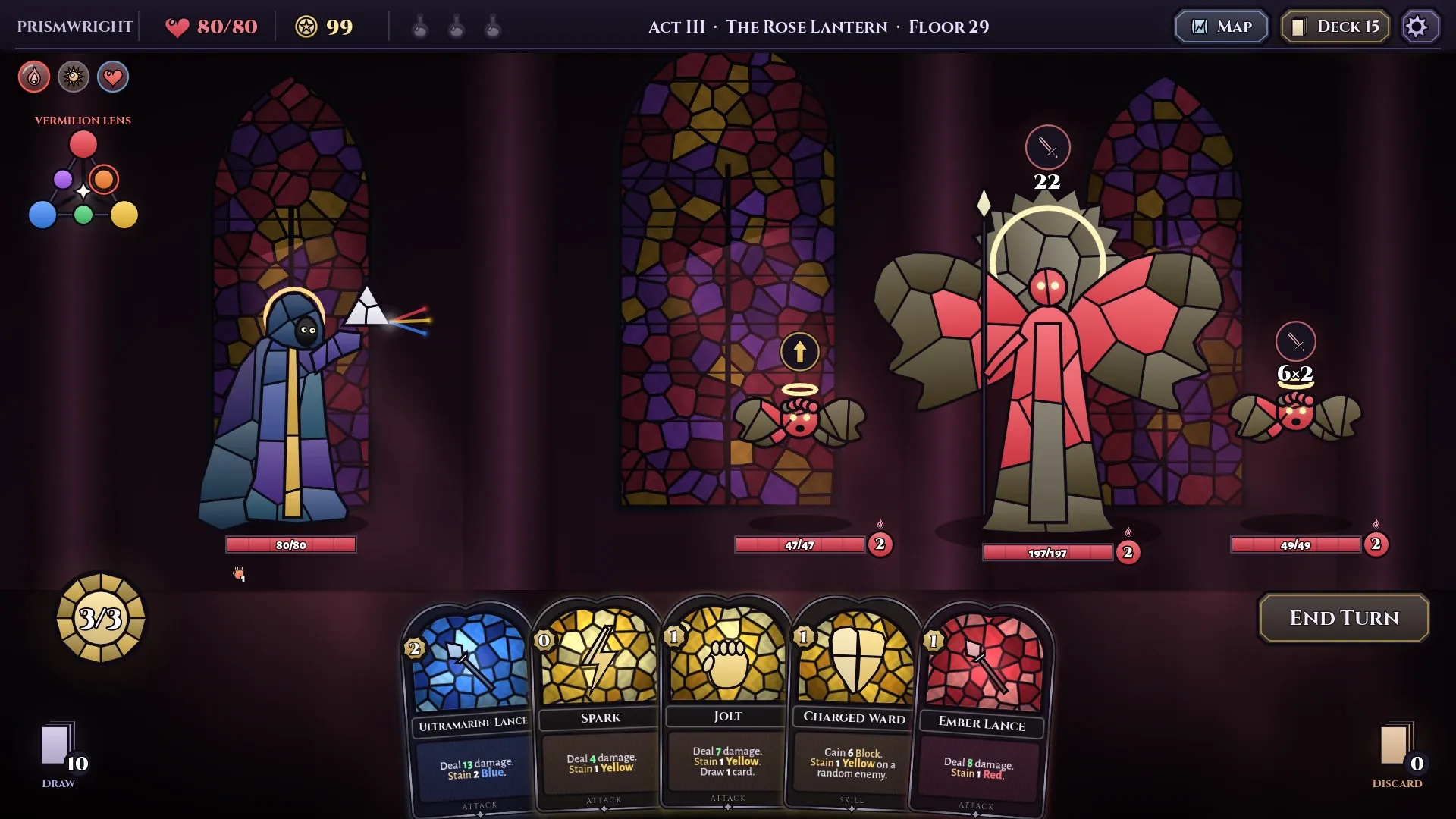
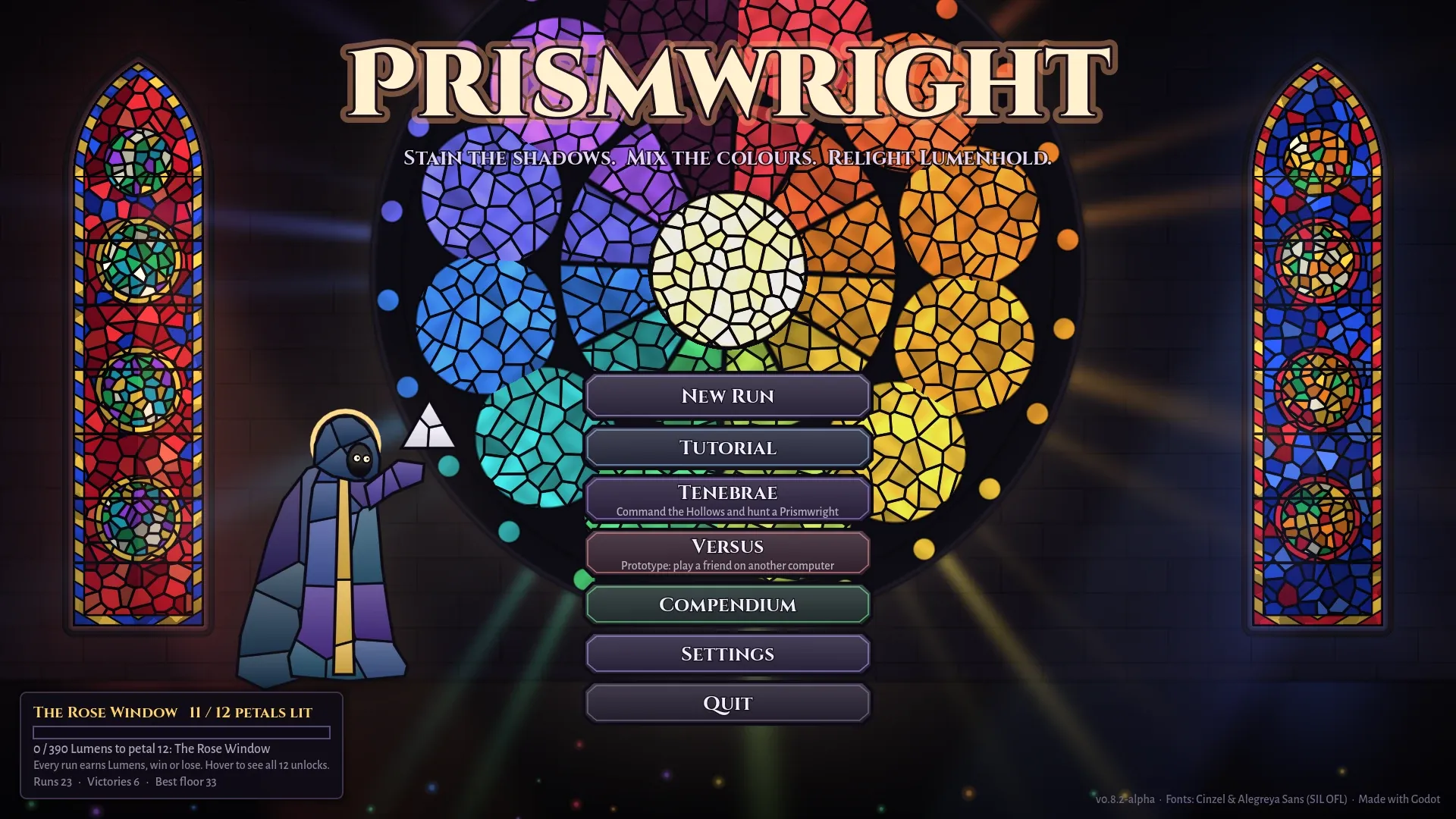
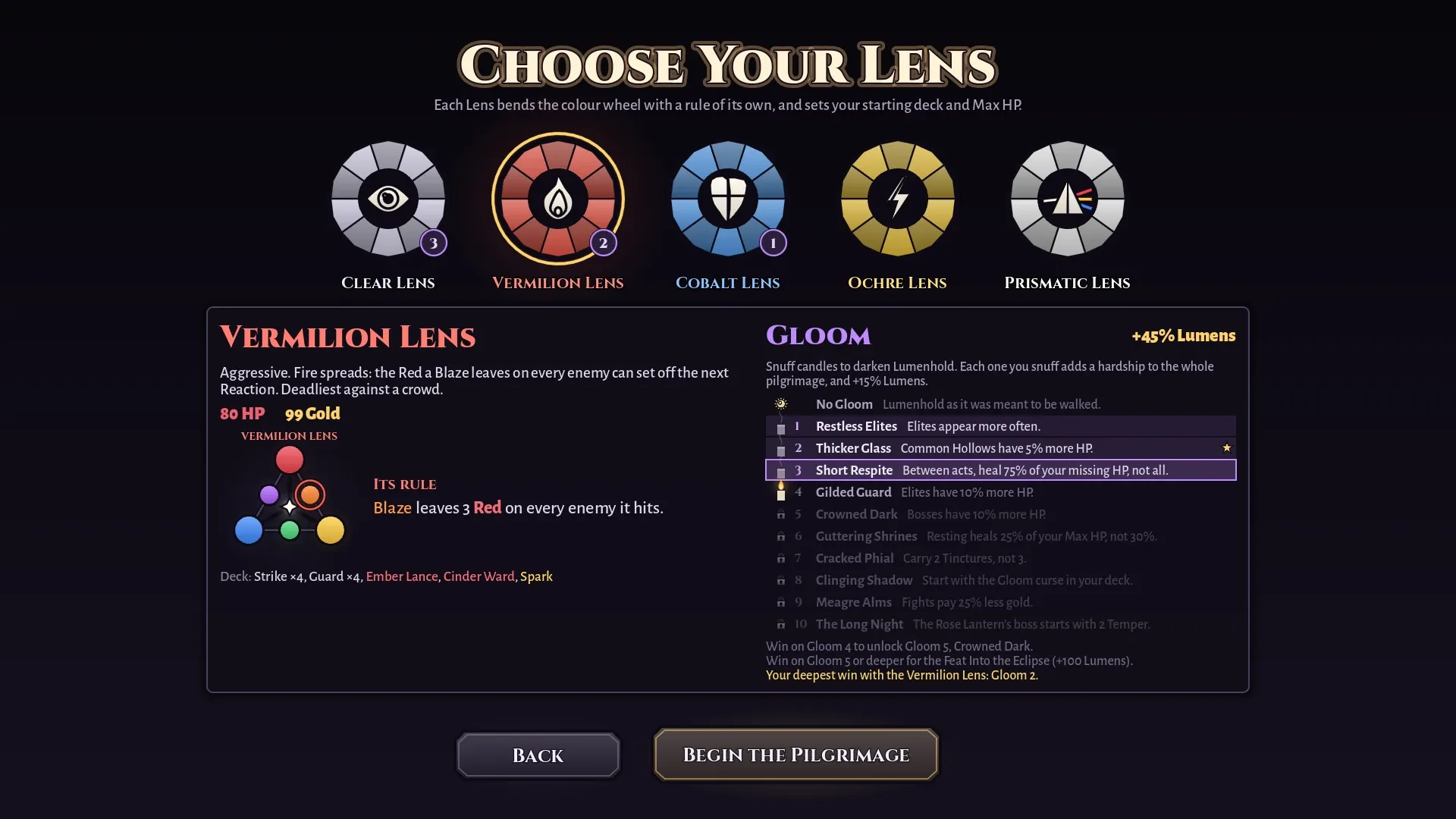
Prismwright is a roguelike deckbuilder set in Lumenhold, a great glass cathedral whose windows have gone dark. Players take the role of the last Prismwright, a glass-mage on a pilgrimage from its Nave to its Lantern, who fights its shadow-glass creatures, the Hollows, by staining them with color.
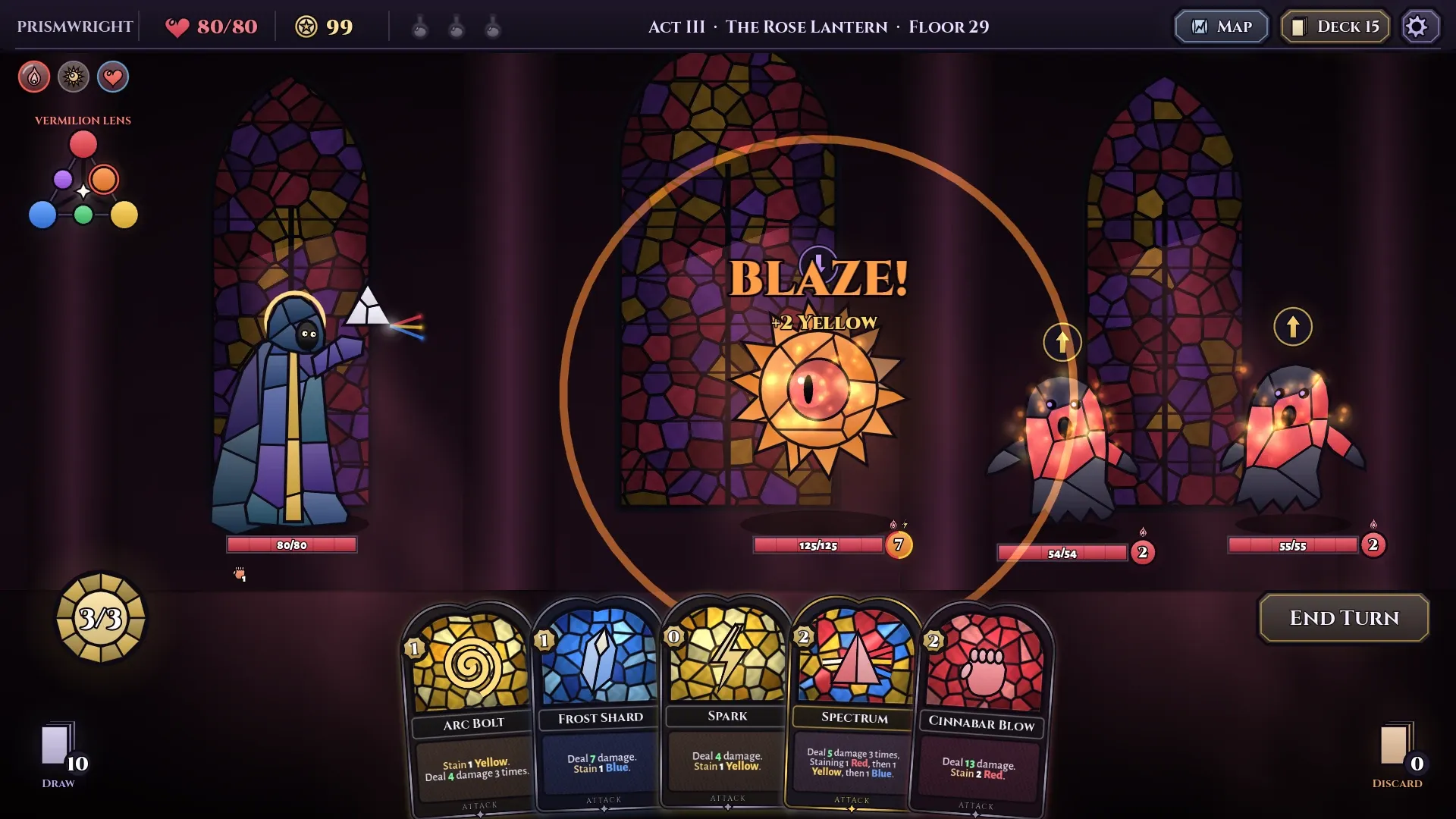
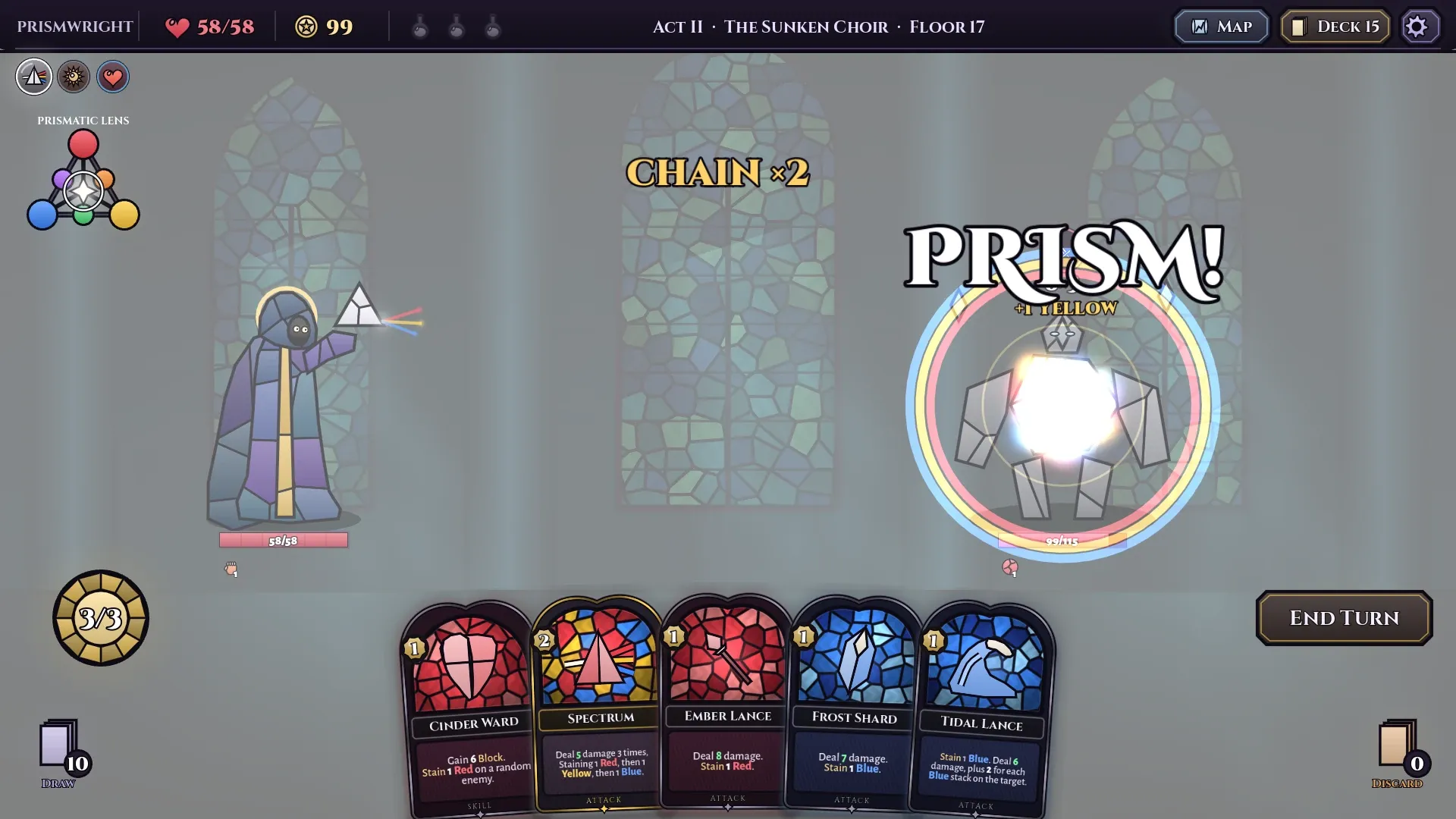
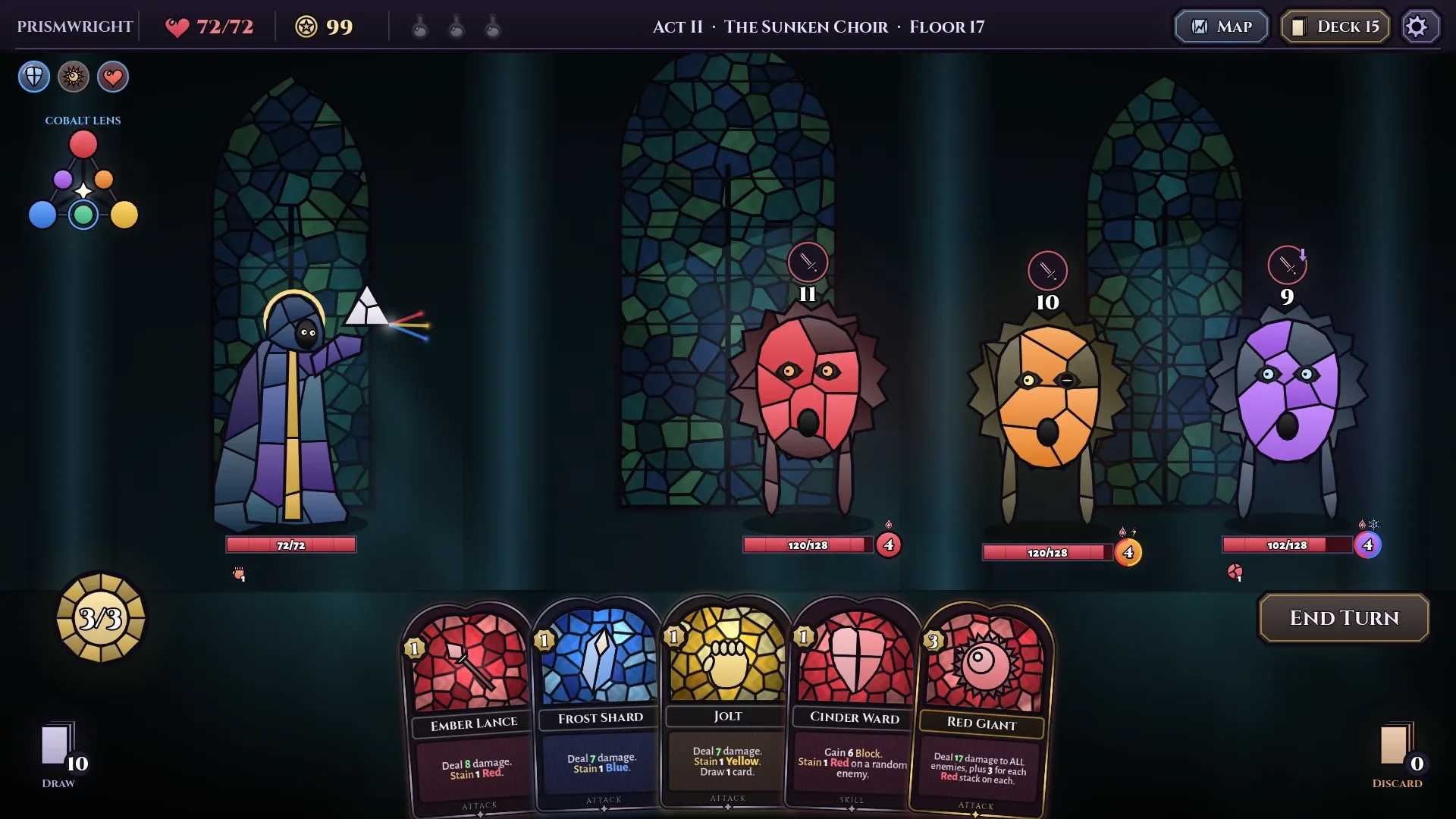
Red, blue and yellow cards stain enemies, and each color does something different: red burns, blue weakens attacks and yellow adds damage to every hit. A second color mixes the stains into a reaction. Red and yellow make Blaze, which damages every enemy at once. Red and blue make Hex, a heavy hit that leaves the glass fractured and taking extra damage. Yellow and blue make Bloom, which shields the player and draws a card. Adding the one color a mixed stain is missing shatters the glass in a PRISM for heavy damage.
Each of the five starting Lenses changes one rule of the color wheel: one makes Blaze leave fresh red stains behind, another makes PRISMs hit harder at the cost of weaker reactions. Some creatures are made of stranger glass. Ruby, amber and cobalt glass can’t take their own color, silvered glass never reacts, volatile glass hurts the player when it does, and iridescent glass changes color every turn. Building a deck around these combinations is the core of every run.
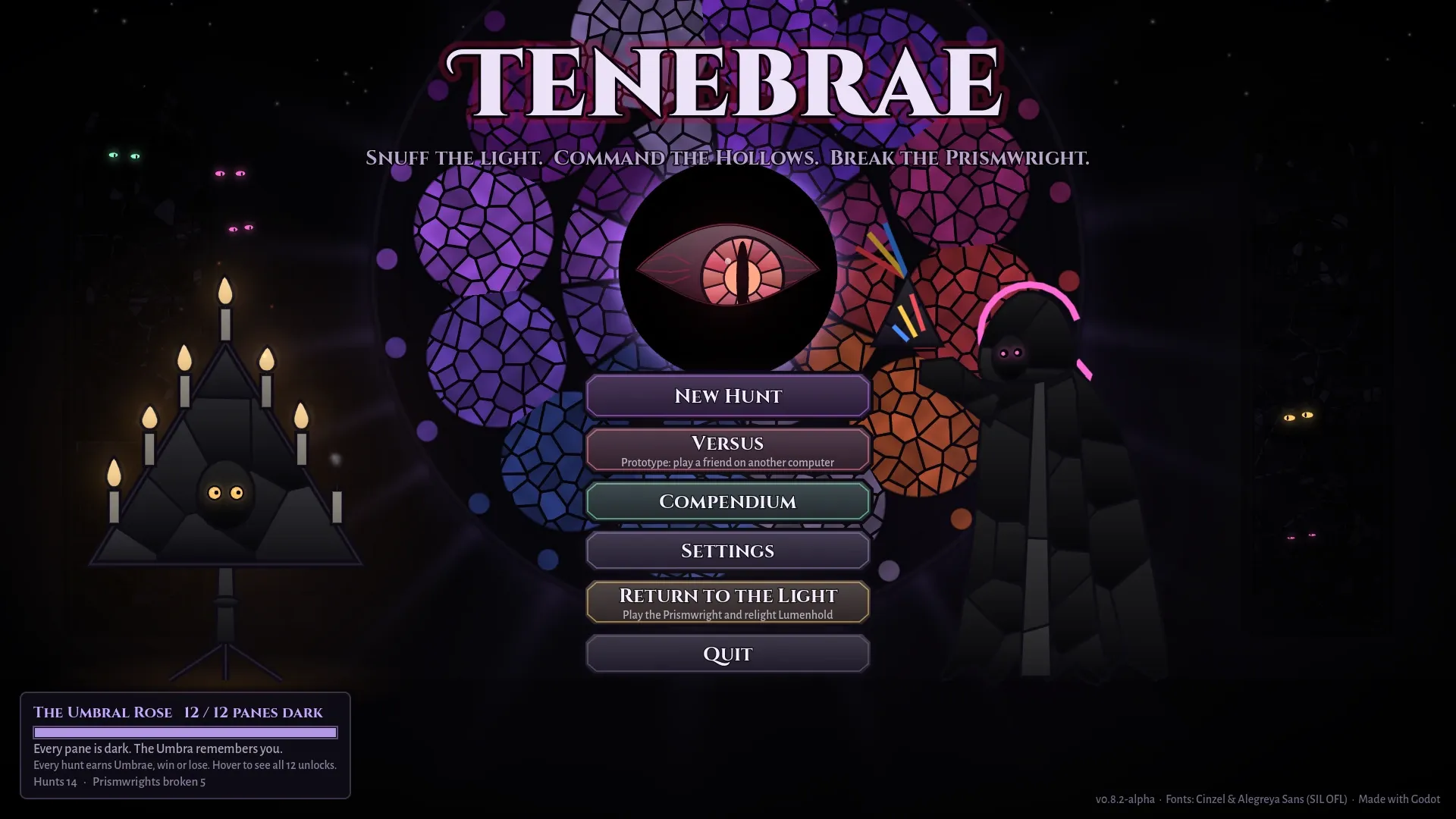
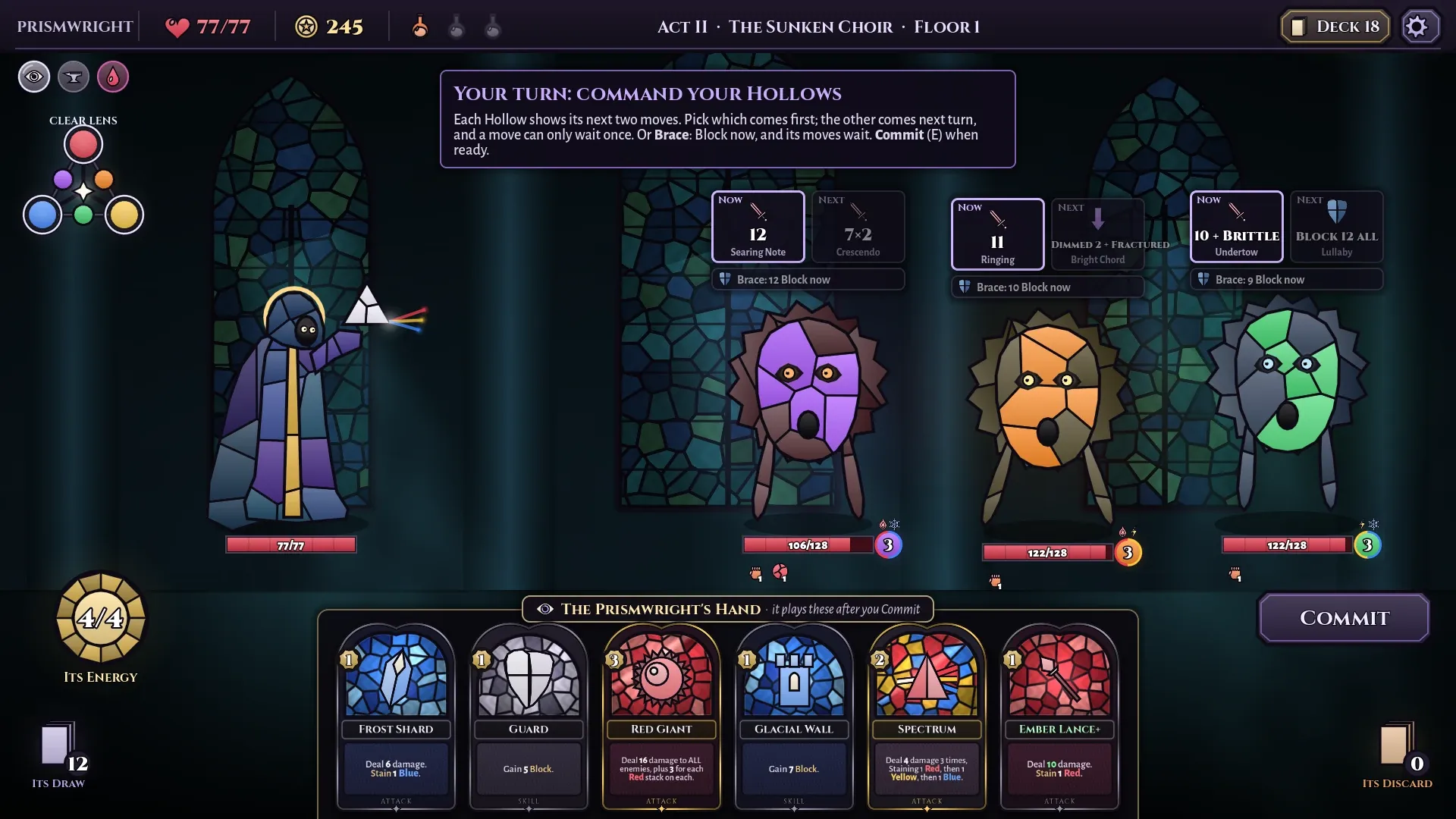
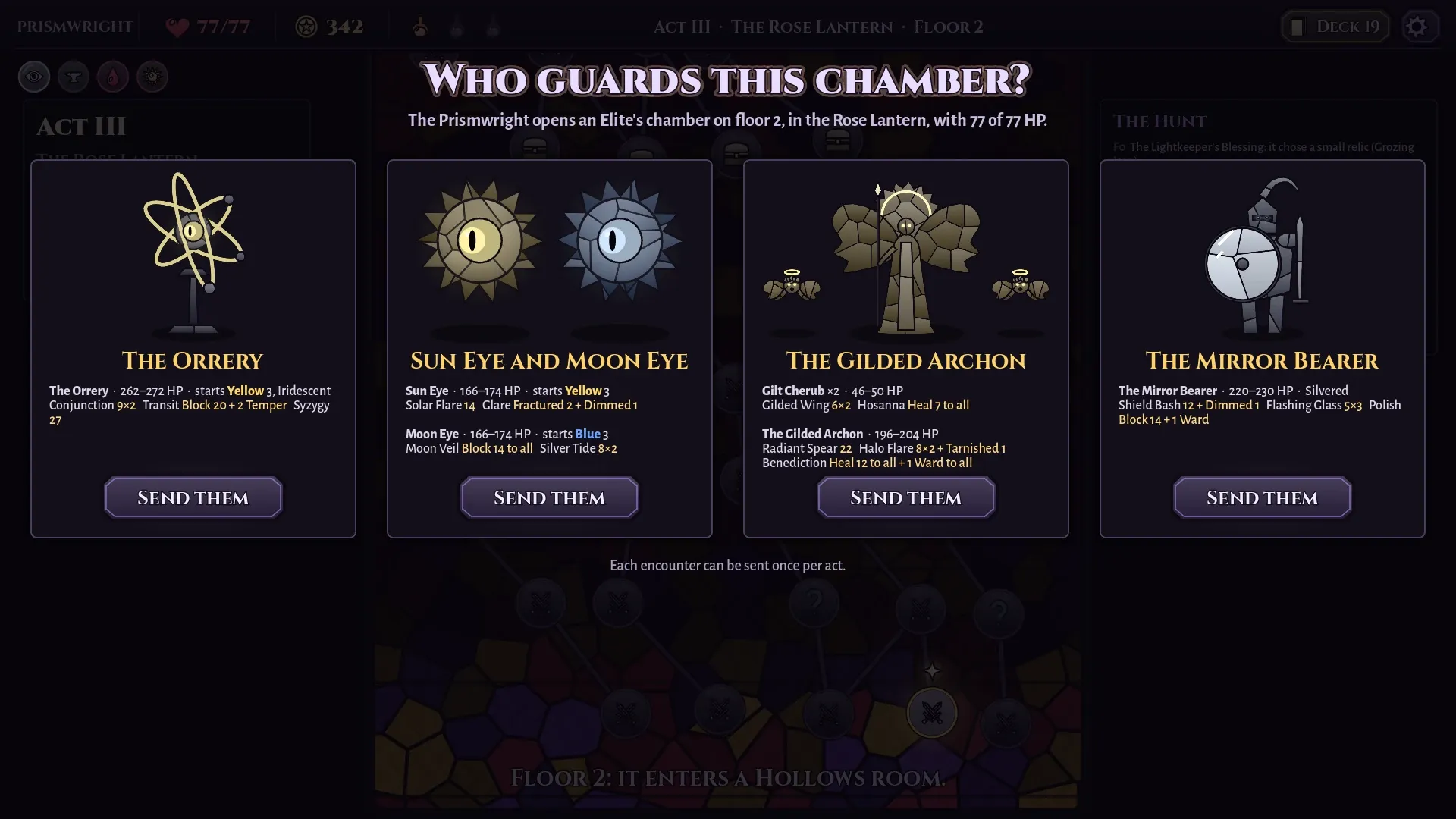
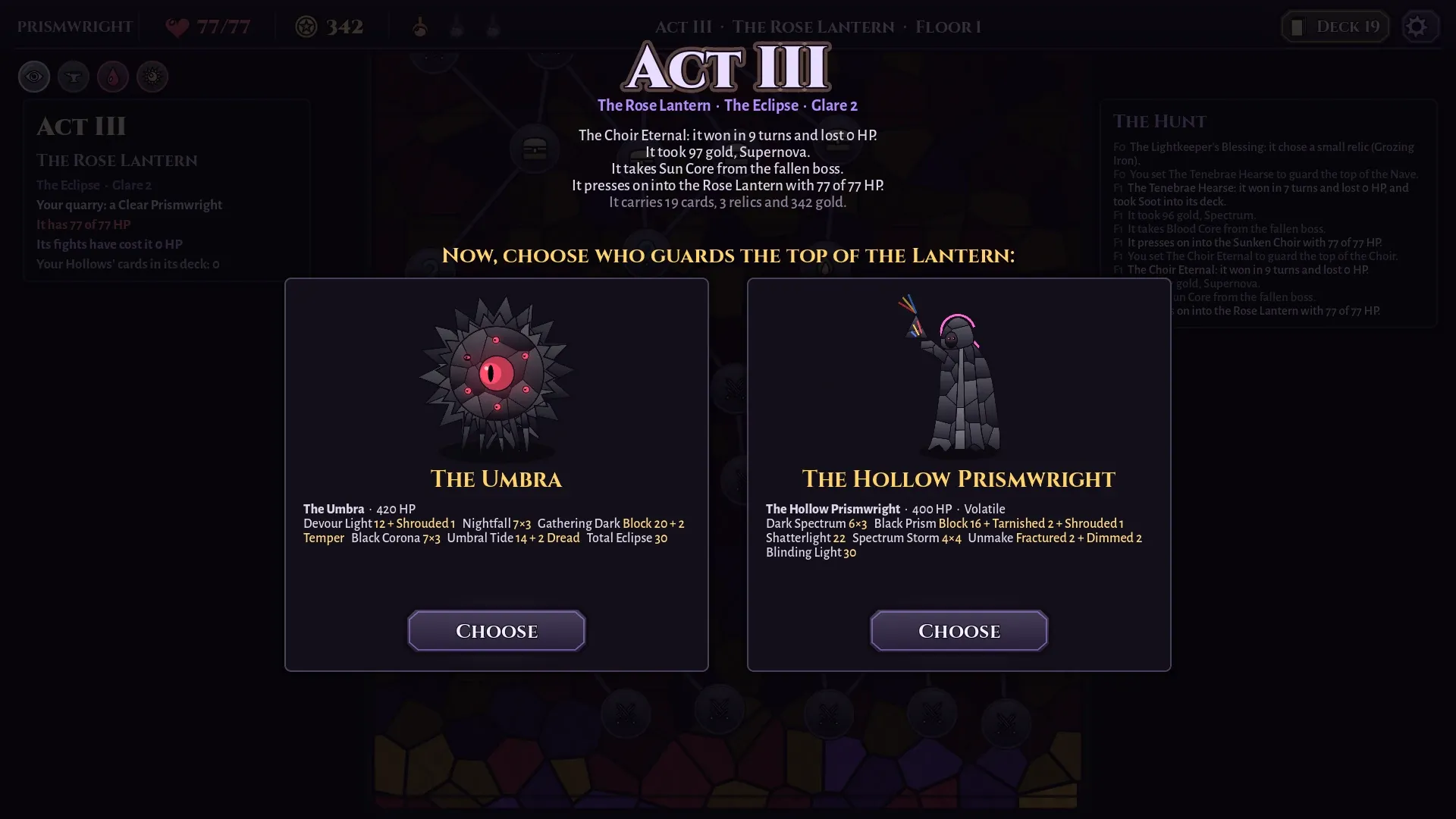
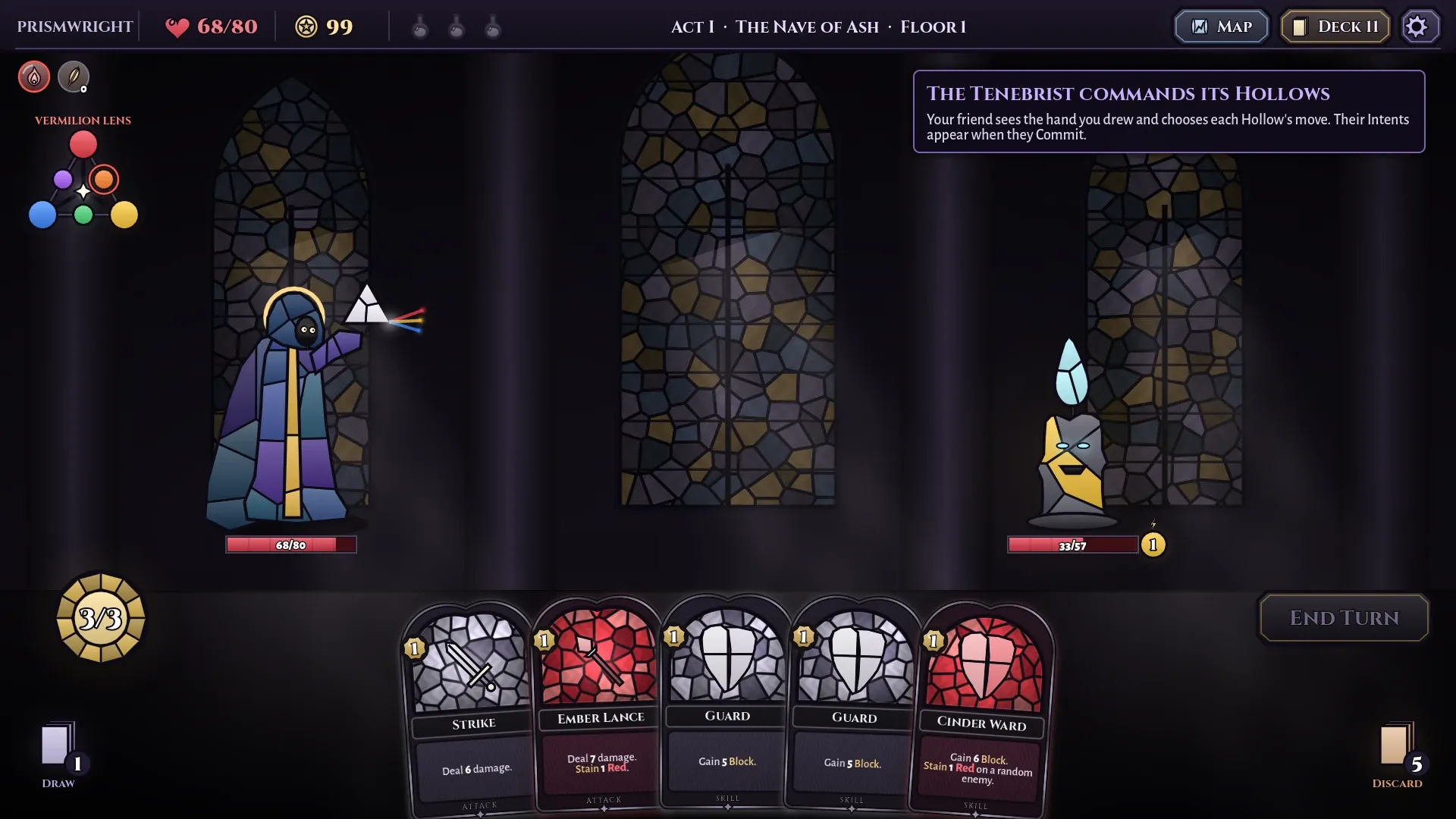
Two further modes, both already playable, put a player in command of the Hollows. In Tenebrae, a computer-controlled Prismwright makes the pilgrimage through all three acts while the player commands the Hollows: choosing the boss at the top of each act and which creatures wait behind each door it opens, seeing the hand it is about to play, and deciding the order of each creature’s moves, with the aim of breaking it before it relights Lumenhold. Tenebrae has its own title screen, the same hall with its light gone, as well as its own unlocks and ten difficulty levels. In Versus, one player plays Act I as the Prismwright while a second player commands the Hollows, choosing the boss, which creatures wait behind each door, and every creature’s moves.
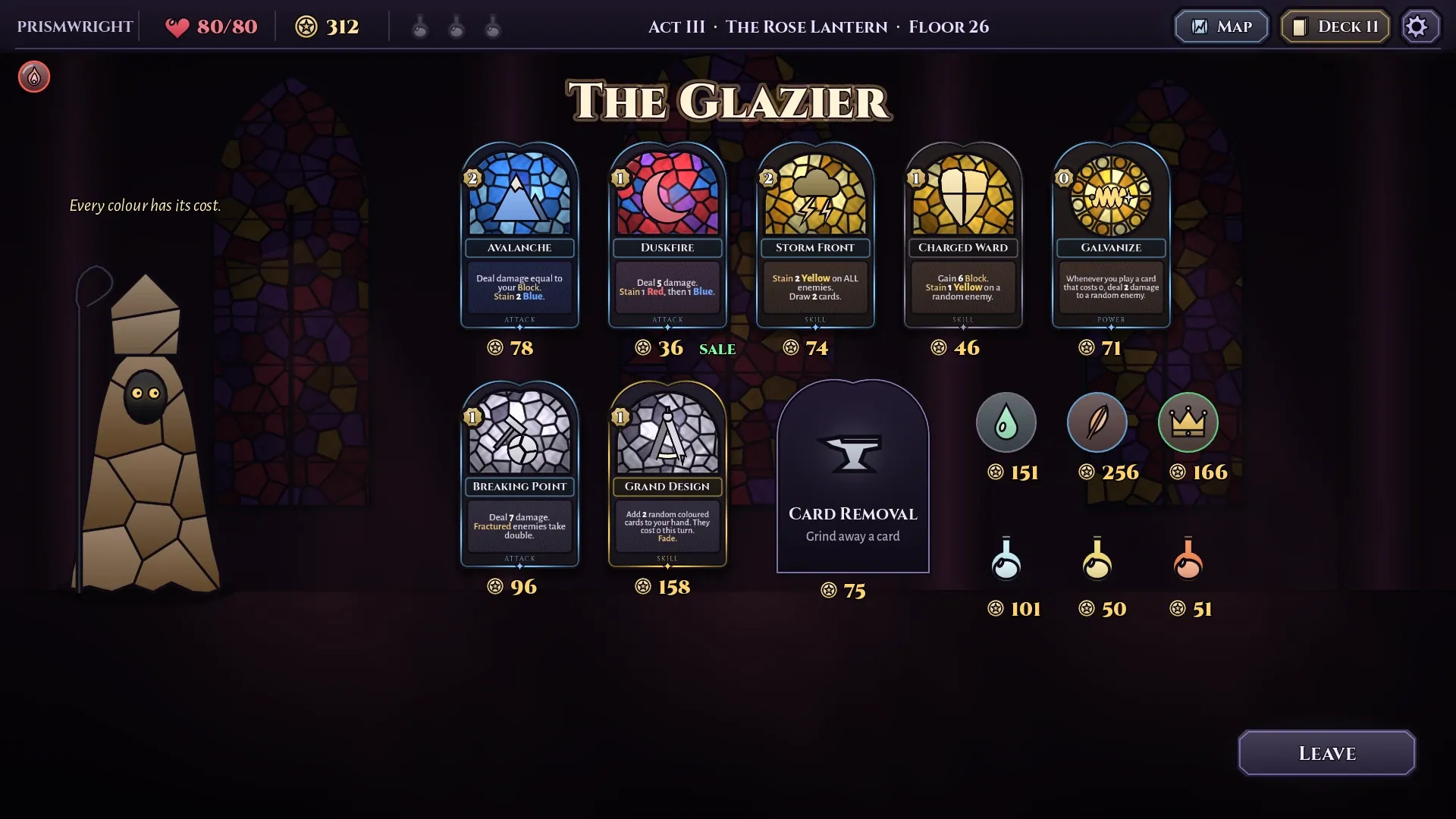
Every image, animation, sound effect and piece of music in Prismwright is generated by the game as it runs, from shaders, polygon drawing and a small built-in synthesizer. Apart from three openly licensed typefaces and its icon, no art or audio files ship with it.
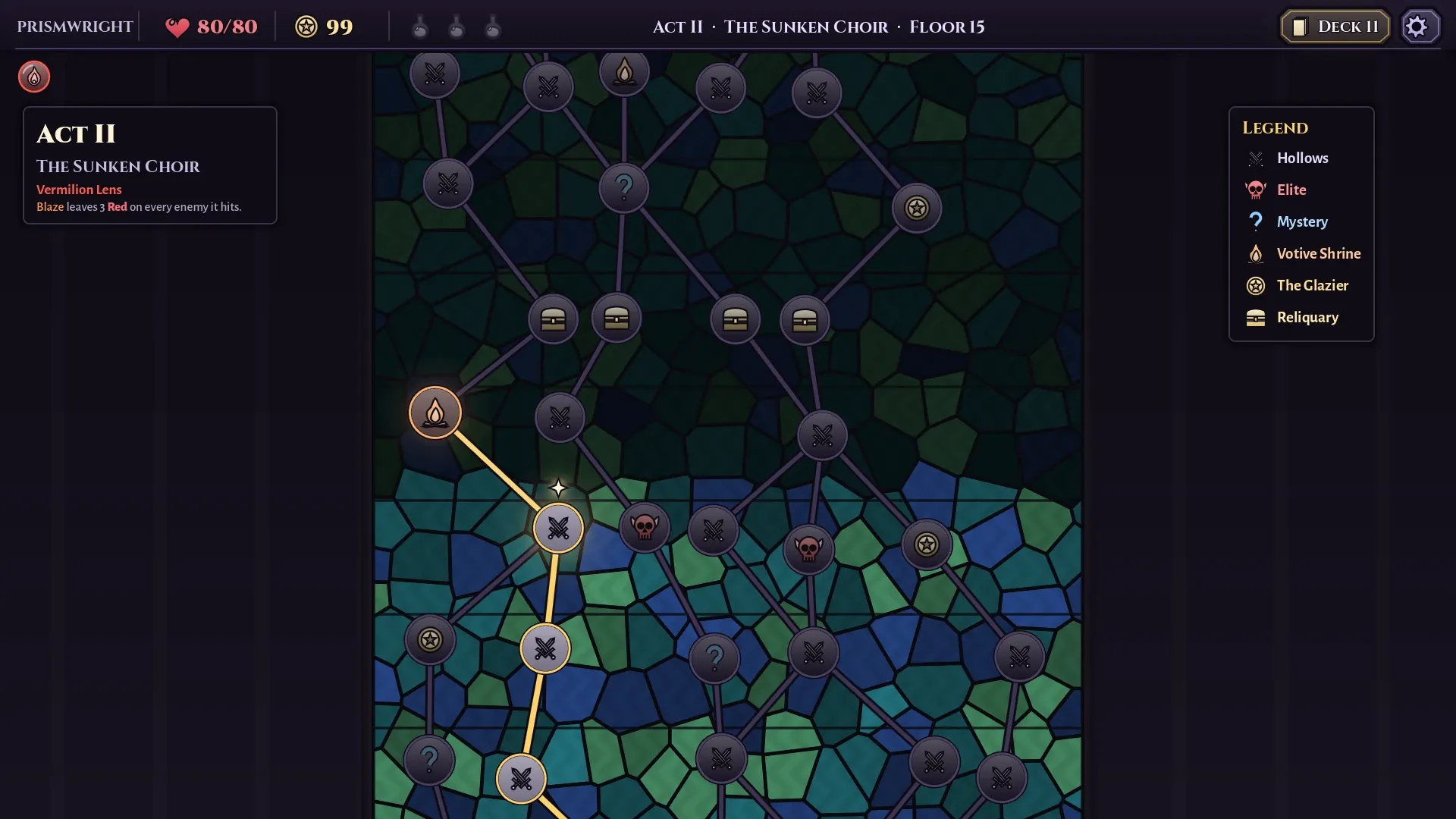
A run is a pilgrimage through three acts, the Nave of Ash, the Sunken Choir and the Rose Lantern, each a branching map drawn as a tall leaded window that relights behind the player, with a boss at the top. The game has more than 140 cards and 80 enemies, including 10 bosses. Progress between runs unlocks new Lenses, cards and relics. The first win opens the first of Gloom’s ten optional difficulty levels, each adding one hardship to the pilgrimage, and winning at the highest level reached opens the next.
A spaceflight simulation about building rockets, flying them, and following one strange measurement all the way to its answer.
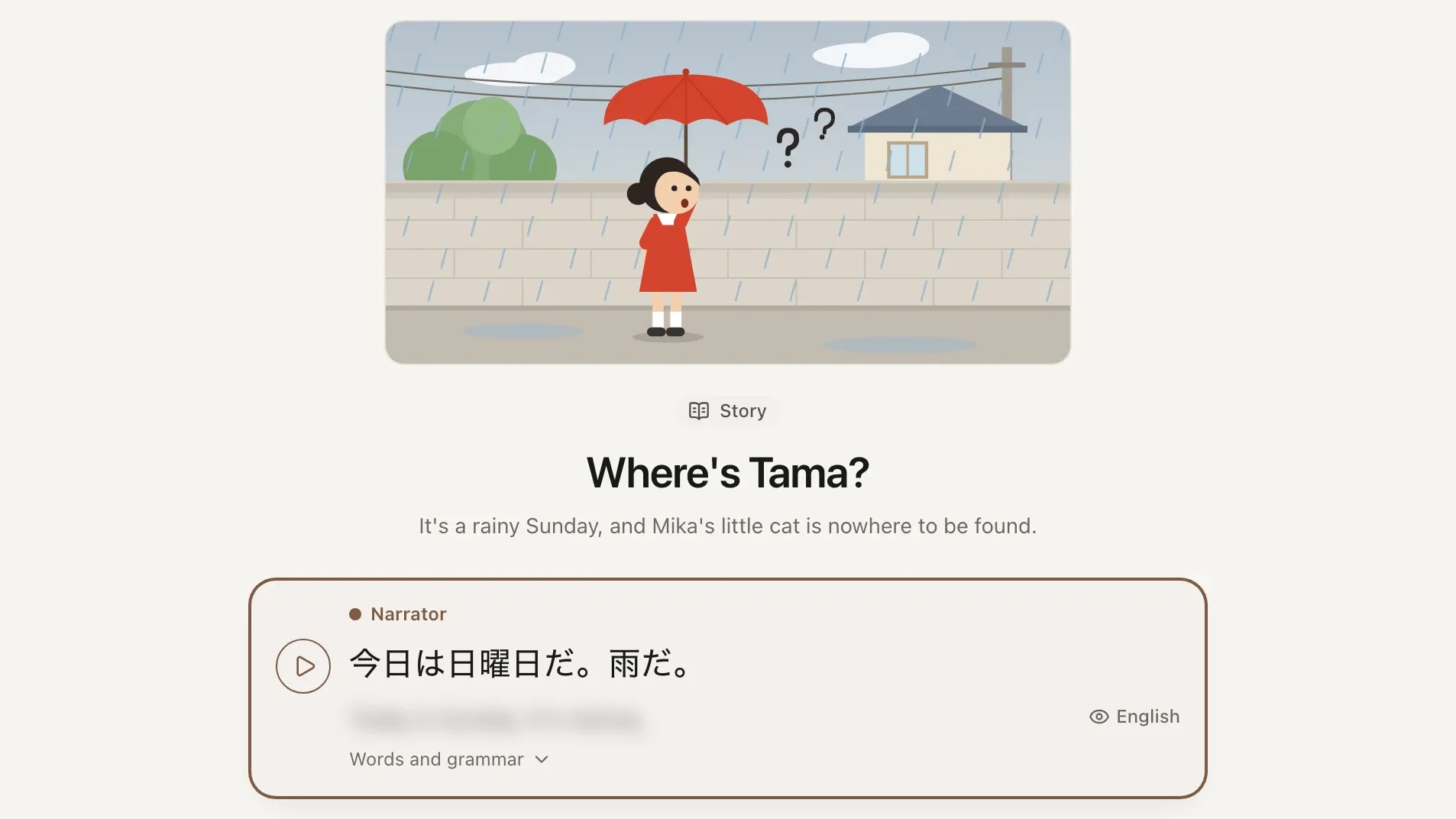
A Japanese course built from short spoken sentences that add at most one new word or grammar point at a time.
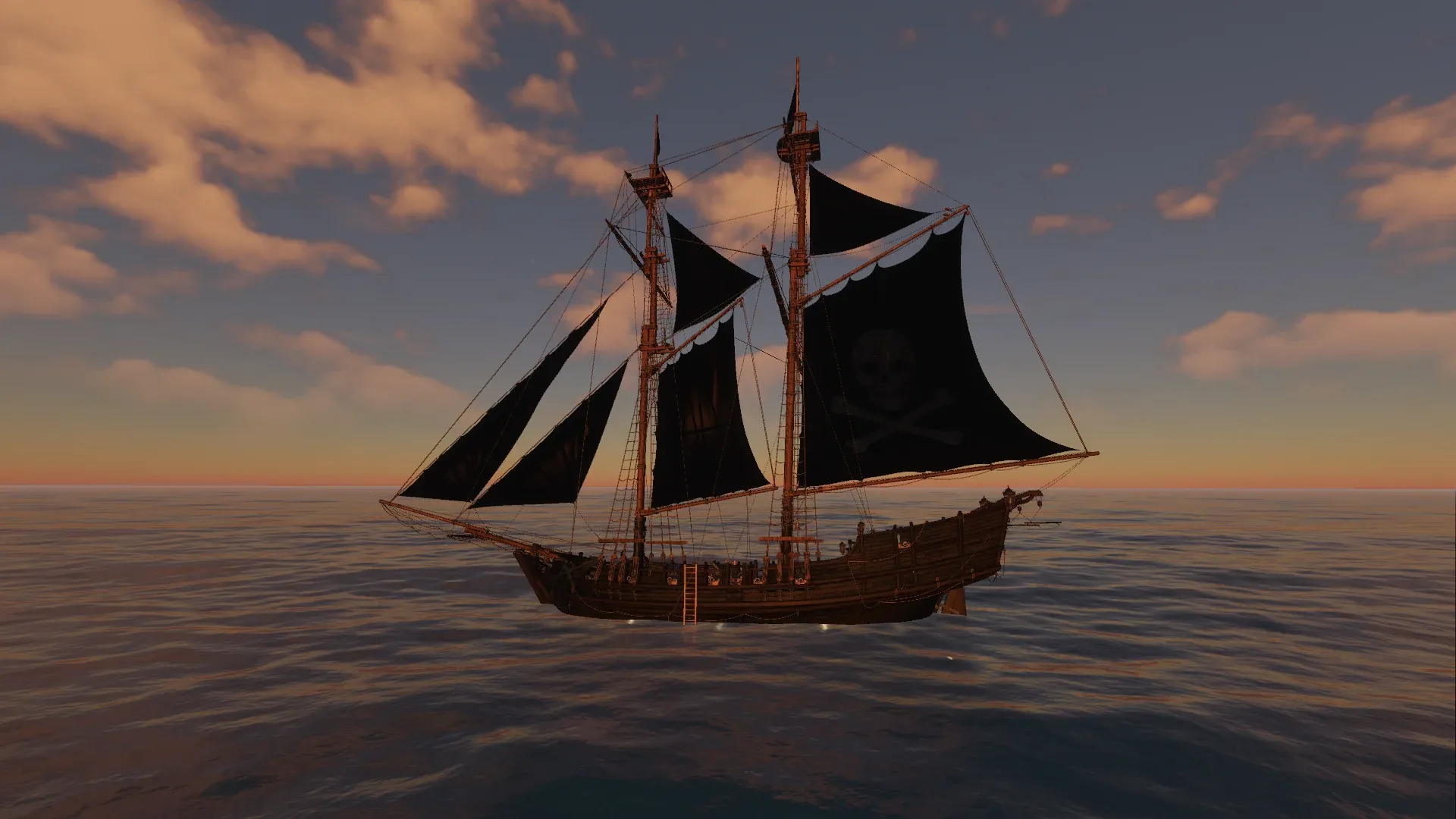
Captain a pirate ship you can walk from bow to stern, then storm islands held by the dead, alone or with a crew of friends.
For press, publishing and business inquiries, or to request playtest access, send the studio a message.
Send a message